
Old slabs, damp summers
Basement Floor Epoxy in Youngstown, OH
A sealed, cleanable basement floor, starting with a test for moisture coming up from the ground.
- Free on-site estimate with a slab moisture test
- Itemized written quote before any grinding starts
- Old paint, sealer and failed kits removed down to sound concrete
Basements Built Before 1960
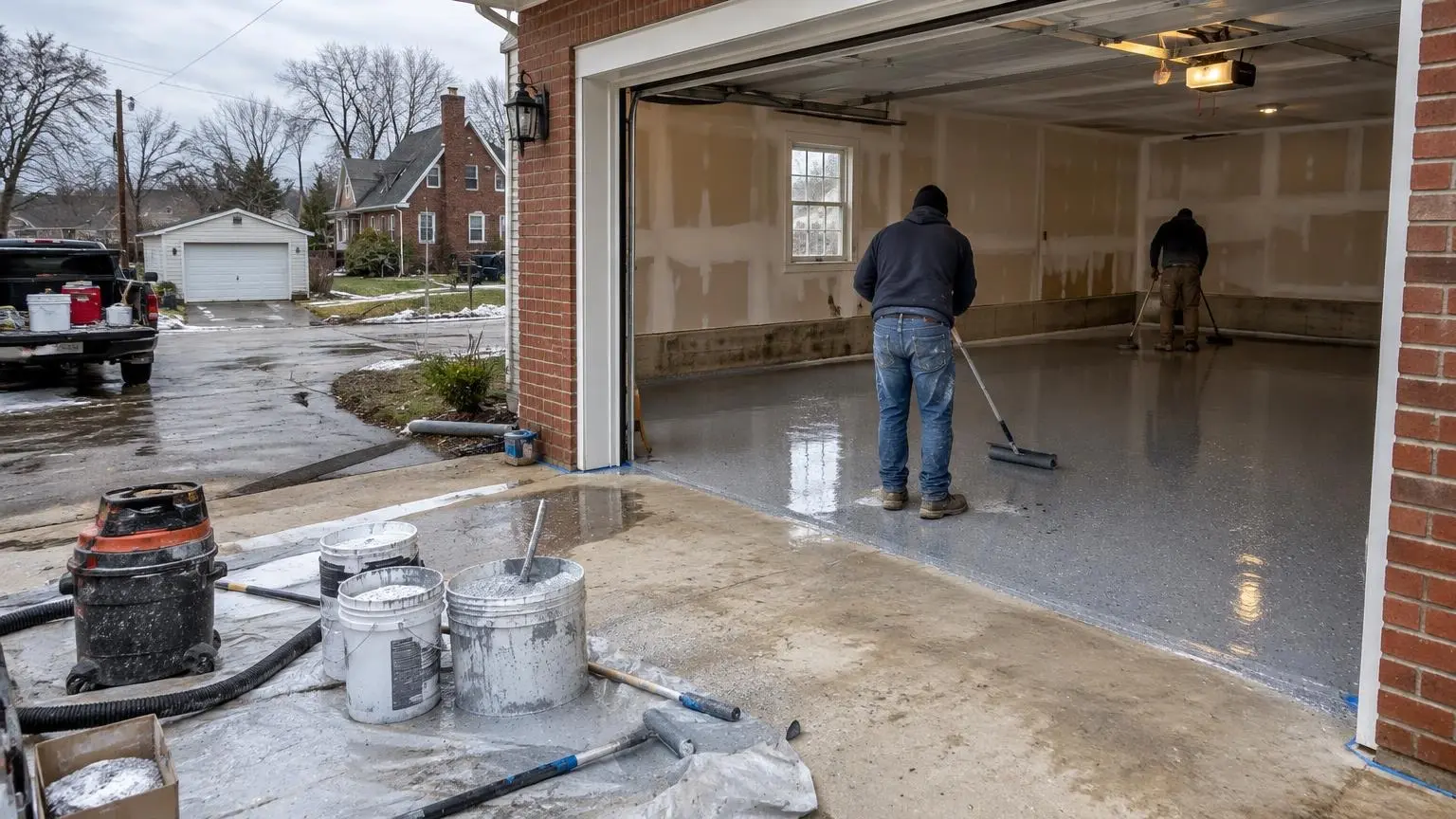
Basement floor epoxy is a common request in Youngstown because so many homes here have full basements on slabs poured generations ago. Census survey figures summarized by Point2Homes show about 72% of the city's homes were built in 1959 or earlier. Those basements hold laundry, furnaces, workbenches and storage, and a lot of owners want them turned into rec rooms. A coating seals the dusty concrete, makes spills easy to wipe up and brightens the space. It only lasts if the slab underneath is dry enough.
Moisture is the deciding factor
Wikipedia puts Youngstown's average relative humidity at 72.5%, and summers here are muggy. The EPA advises keeping indoor humidity under 60% and notes that warm, humid air forms condensation on cold surfaces. A basement floor is a cold surface. Moisture also comes up through the slab from the ground, especially after a wet spring. Coatings blister when that vapor gets trapped under them. Every basement estimate includes a moisture test, and the reading sets the system.
What we do with the reading
- Dry slab: standard epoxy primer, then the finish you choose.
- Elevated vapor: a moisture-tolerant epoxy primer rated for the reading, then the finish.
- Active water: seepage at the wall joint, leaking cracks or standing water mean the water problem gets fixed first. We will say so plainly instead of coating over it.
Old floors, old surprises
Older basement floors often carry paint, tile adhesive, sealers or the outline of a long-gone oil tank. Some have been patched with mortar that is weaker than the slab around it. Grinding shows us what is there, and anything loose comes off. Cracks are cleaned and filled. Floor drains are masked and the coating is brought neatly to the edge so water can still reach them.
Finish choices
- Solid color: clean and bright for laundry rooms, utility areas and workshops.
- Flake broadcast: textured and forgiving in high-traffic areas or by the walkout door.
- Metallic epoxy: a poured, marbled look for a finished family room, bar or home theater. This Old House puts metallic floors at about $5 to $12 per square foot.
- Clear sealer over ground concrete: a simpler, industrial look.
Radon and coatings
The EPA names radon the number one cause of lung cancer among non-smokers. Epoxy seals the surface it covers, but it does not mitigate radon. If you are finishing a basement, test first and install mitigation if needed, then coat.
Living with the floor
Keep a dehumidifier running in summer, wipe spills promptly and use furniture pads. A coated basement floor takes a damp mop and mild cleaner.
Planning a finished basement
If the basement is becoming a family room or gym, coat the floor before walls, trim and built-ins go in where possible. That lets us grind and coat edge to edge without working around new drywall. If finishing is already done, we tape and protect walls and work up to the base trim. Rubber gym tiles and area rugs both sit well on a cured coating.
What This Covers
A basement job is planned around moisture first and looks second.
Moisture testing
A reading on the slab at the estimate to pick the right primer.
Coating and adhesive removal
Old paint, mastic and sealers ground off down to bare concrete.
Crack and patch repair
Cracks and weak old patches cut out and filled.
Moisture-tolerant primer
Used where vapor readings call for it, under any finish.
Finish system
Solid, flake or metallic epoxy with a clear topcoat.
Typical Basement Floor Epoxy Costs
| Item | Published range |
|---|---|
| Installed epoxy, per sq ft | $4 to $10 |
| Basement floor (300 to 2,000 sq ft) | $1,200 to $20,000 |
| Metallic epoxy, per sq ft | $5 to $12 |
| Moisture and hardness testing | $50 to $300 |
| Concrete resurfacing, per sq ft | $3 to $7 |
National ranges from HomeGuide (epoxy, basement, testing and resurfacing) and This Old House (metallic). Moisture primers and coating removal can move a basement toward the high end. Your written estimate is the price.
How It Works
1. Test and inspect
Moisture reading, crack check and a look for old coatings and patches.
2. Clear and grind
The floor is cleared, ground and vacuumed, and drains are masked.
3. Repair and prime
Cracks are filled and the primer goes down, moisture-tolerant where needed.
4. Finish and cure
Color, flake or metallic layer and topcoat, then cure times in writing.
Basement Floor Epoxy Questions
Is epoxy a good idea for a basement floor?
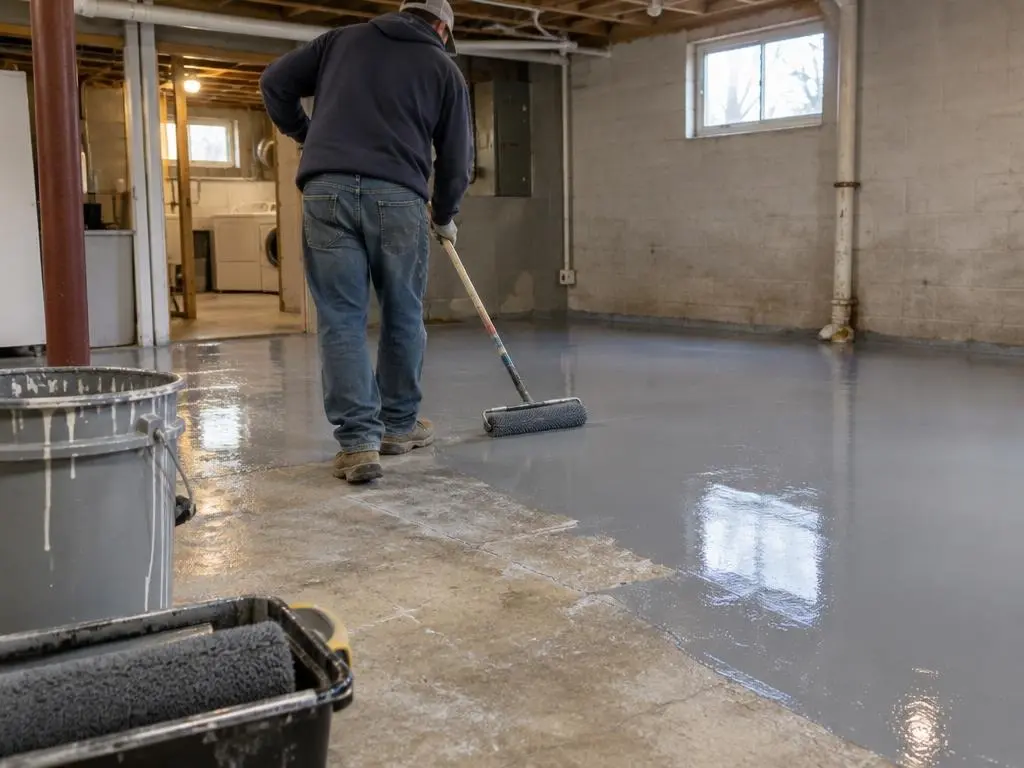
On a dry or moderately damp slab with the right primer, yes. It seals dust, cleans easily and brightens the space. It is a poor choice over active leaks, which need fixing first.
Why do basement floor coatings peel or bubble?
Moisture vapor rising through the slab is the usual cause, followed by poor prep over paint or sealer. Testing and grinding before coating address both.
How much does it cost to epoxy a basement floor?
HomeGuide's national range is $1,200 to $20,000 for basements of 300 to 2,000 square feet. Metallic finishes and moisture primers raise the price. We quote after testing the slab.
Can you epoxy over old basement floor paint?
No. Paint has a weaker bond than the coating would need. We grind it off so the epoxy bonds directly to concrete.
Basement Floor Epoxy Service Areas
- Epoxy Flooring in Youngstown, OH
- Epoxy Flooring in Boardman, OH
- Epoxy Flooring in Austintown, OH
- Epoxy Flooring in Canfield, OH
- Epoxy Flooring in Poland, OH
- Epoxy Flooring in Struthers, OH
- Epoxy Flooring in Campbell, OH
- Epoxy Flooring in Lowellville, OH
- Epoxy Flooring in New Middletown, OH
- Epoxy Flooring in Girard, OH
- Epoxy Flooring in Liberty Township, OH
- Epoxy Flooring in Hubbard, OH
- Epoxy Flooring in Niles, OH
- Epoxy Flooring in Mineral Ridge, OH
- Epoxy Flooring in Warren, OH
- Epoxy Flooring in Howland Township, OH
- Epoxy Flooring in Cortland, OH
- Epoxy Flooring in Lordstown, OH
- Epoxy Flooring in Newton Falls, OH
- Epoxy Flooring in Columbiana, OH
- Epoxy Flooring in Salem, OH
- Epoxy Flooring in Hermitage, PA
- Epoxy Flooring in Sharon, PA
Get a Basement Floor Epoxy Estimate
Free basement floor estimates with a moisture test included.